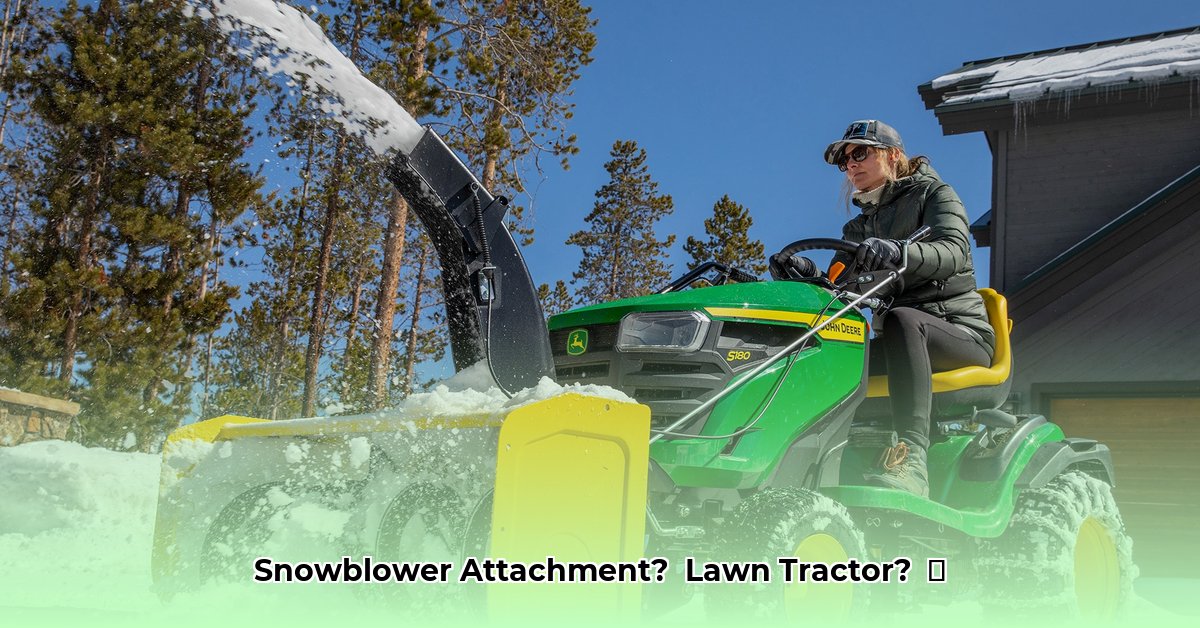
Ready to conquer winter's snowy onslaught without the backache? A snow blower attachment for your lawn tractor can transform your snow removal routine. But with various models and compatibility concerns, choosing the right one can be daunting. This guide provides a step-by-step process to select, install, and operate a snow blower attachment safely and effectively. For more information on lawn tractors with snow blowers, check out this helpful resource: Learn More.
Assessing Your Needs: Matching Your Tractor and the Snow
Before browsing snow blower attachments, understanding your needs is crucial. Factors such as snowfall, property size, and tractor horsepower influence your choice.
- Snowfall: Consider your average and heaviest annual snowfall. Light snow requires less powerful equipment than heavy, wet snow.
- Property Size: Measure the area needing clearing (driveways, walkways). Larger areas necessitate wider clearing paths and possibly more powerful machines.
- Tractor Horsepower (HP): This is paramount. Your lawn tractor's owner's manual specifies its horsepower (HP) rating. Underpowering your snow blower leads to strain, damage, and potential injury. Attachments specify minimum HP requirements; exceeding them ensures optimal performance. Don't underestimate this crucial factor.
Choosing the Right Attachment: Single, Dual, or Tri-Stage
Snow blower attachments come in three main types: single, dual, and tri-stage. Each excels in different conditions:
- Single-Stage: Ideal for small areas and light snowfall. These simpler, less expensive attachments are best for powdery snow. They are less powerful and struggle with heavy, packed snow.
- Dual-Stage: Workhorses for moderate to heavy snowfall. They use an auger to gather snow and a fan to throw it further than single-stage models. They offer better clearing performance and handle heavier snowfall, but cost more.
- Tri-Stage: Heavy-duty machines for large properties with frequent, heavy snowfall. Two augers break up heavy snow before a fan throws it, but require significant tractor horsepower and carry a higher price tag.
Here's a comparison table:
| Feature | Single-Stage | Dual-Stage | Tri-Stage |
|---|---|---|---|
| Snow Handling | Light | Moderate to Heavy | Heavy |
| Horsepower Needs | Low | Medium | High |
| Clearing Width | Narrow | Medium | Wide |
| Throwing Distance | Short | Medium to Long | Long |
| Price | Low | Medium | High |
Compatibility is Key: Always verify compatibility between your tractor and the snow blower attachment. Manufacturers often provide compatibility charts on their websites. Improper installation can damage your equipment.
Installation and Setup: A Step-by-Step Guide
Proper installation prevents damage. Always consult your equipment's manual.
Step 1: Preparation: Turn off and cool your tractor. Disconnect the power take-off (PTO) shaft if needed (check your manual).
Step 2: Alignment: Carefully align the attachment with your tractor's PTO shaft or mounting points. Accuracy is crucial.
Step 3: Secure Fastening: Use provided hardware to securely fasten the attachment. Ensure all bolts are tight.
Step 4: Hydraulic Connections (If Applicable): Connect hydraulic lines (if used) precisely as per your manual.
Step 5: Test Run: Before heavy snow, test the attachment in an open area to ensure proper function and familiarization with controls.
Operation and Maintenance: Extending Your Attachment's Lifespan
Prioritize safety. Wear appropriate safety gear (eye protection). Clear debris before operation. Avoid overloading the engine; work in manageable sections. Regularly inspect for wear and tear (auger, chute, impeller). Lubricate moving parts to prevent damage and extend lifespan.
Troubleshooting: Addressing Common Issues
Even the best equipment can malfunction.
- Jammed Auger: Ice or large snow clumps cause this. Turn off the machine before clearing the blockage. Never reach into a running machine!
- Clogged Chute: Compacted snow or ice clogs the chute. Turn off the machine before clearing.
- Engine Overload: Trying to clear too much snow or using an underpowered attachment causes overload. Work in smaller sections.
If problems persist, consult your owner's manual or a professional.
Conclusion: Ready for Winter's White Challenge
Choosing the right snow blower attachment for your lawn tractor significantly simplifies winter snow removal. By carefully assessing your needs, selecting the correct attachment type, and following proper installation and maintenance, you'll be ready to tackle any winter storm confidently, and efficiently.